
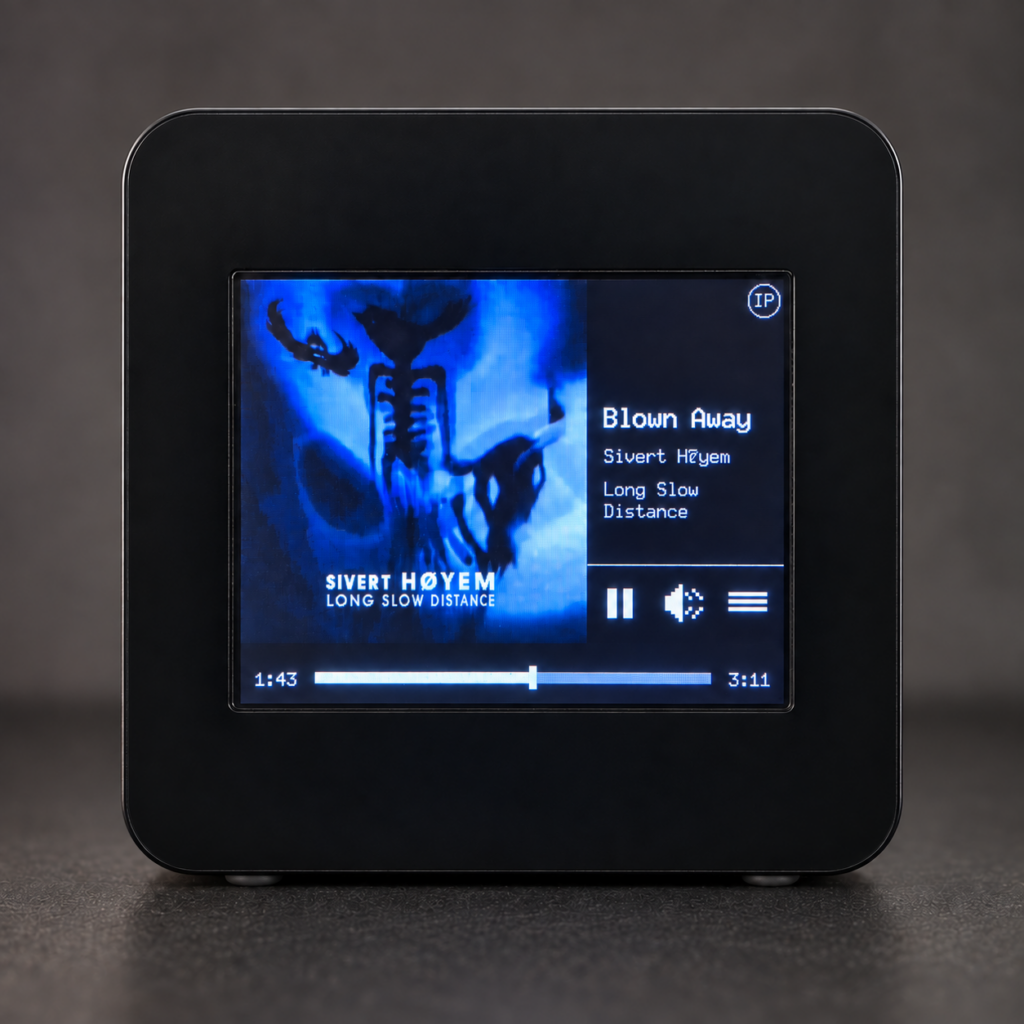
Album artwork, track information and playback controls, right on the front of a compact Raspberry Pi music streamer. Here’s a look at the Volumio LCD player we’ve been developing and testing on PIXIS CB-1.
Download this article as a PDF (4 pages, 14 MB)
A music streamer feels more complete when you can see what is playing without reaching for another screen. An album cover, a track title and a few accessible controls turn a small computer into something that feels at home beside your audio equipment.
That is the idea behind our Volumio LCD streaming player. It brings together the PIXIS CB-1 carrier board, a Raspberry Pi and a 2.8-inch capacitive touchscreen, with Volumio 4 providing the music-player platform. The display puts the essentials on the front of the unit: artwork, track information, playback progress and touch controls for everyday listening.
A useful front panel
The LCD does more than show that the player is switched on. It gives the music a visible presence. Artwork helps identify an album at a glance, while the track information tells you what you are hearing. A moving progress strip shows how playback is advancing.
Touch Play/Pause and volume controls bring the most immediate actions onto the player itself. In our recent tests, these controls worked alongside changing artwork and track information, including updates as playback moved naturally from one track to the next.
Portrait or landscape
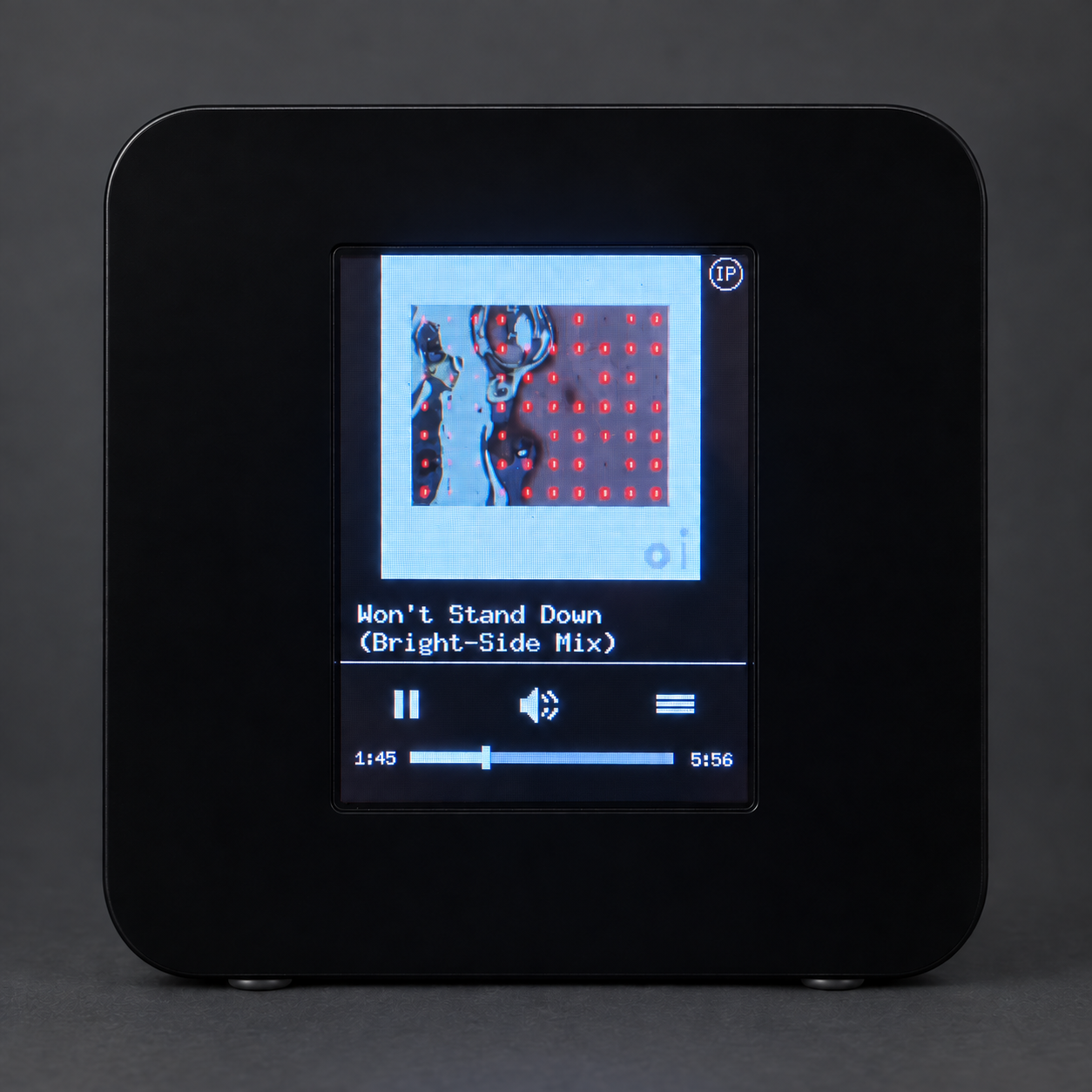
We have tested both portrait and landscape layouts on our Raspberry Pi 3A+ reference units. Landscape places the artwork beside the track details and controls; portrait arranges the information vertically. The choice gives builders another way to tailor the front panel to the appearance they want.
The recent display software revision brought larger artwork and improved controls in our landscape testing. It also gave the portrait layout a working progress strip—a small addition that makes the player’s state easier to understand while listening.
PIXIS CB-1 carrier board
Raspberry Pi 3A+ or Raspberry Pi Zero 2 W, within the tested configurations
Waveshare 2.8-inch SPI capacitive touchscreen, SKU 27579
Volumio 4.119 with @nerd’s runtime-v1.6.0 display software
A look at the back panels
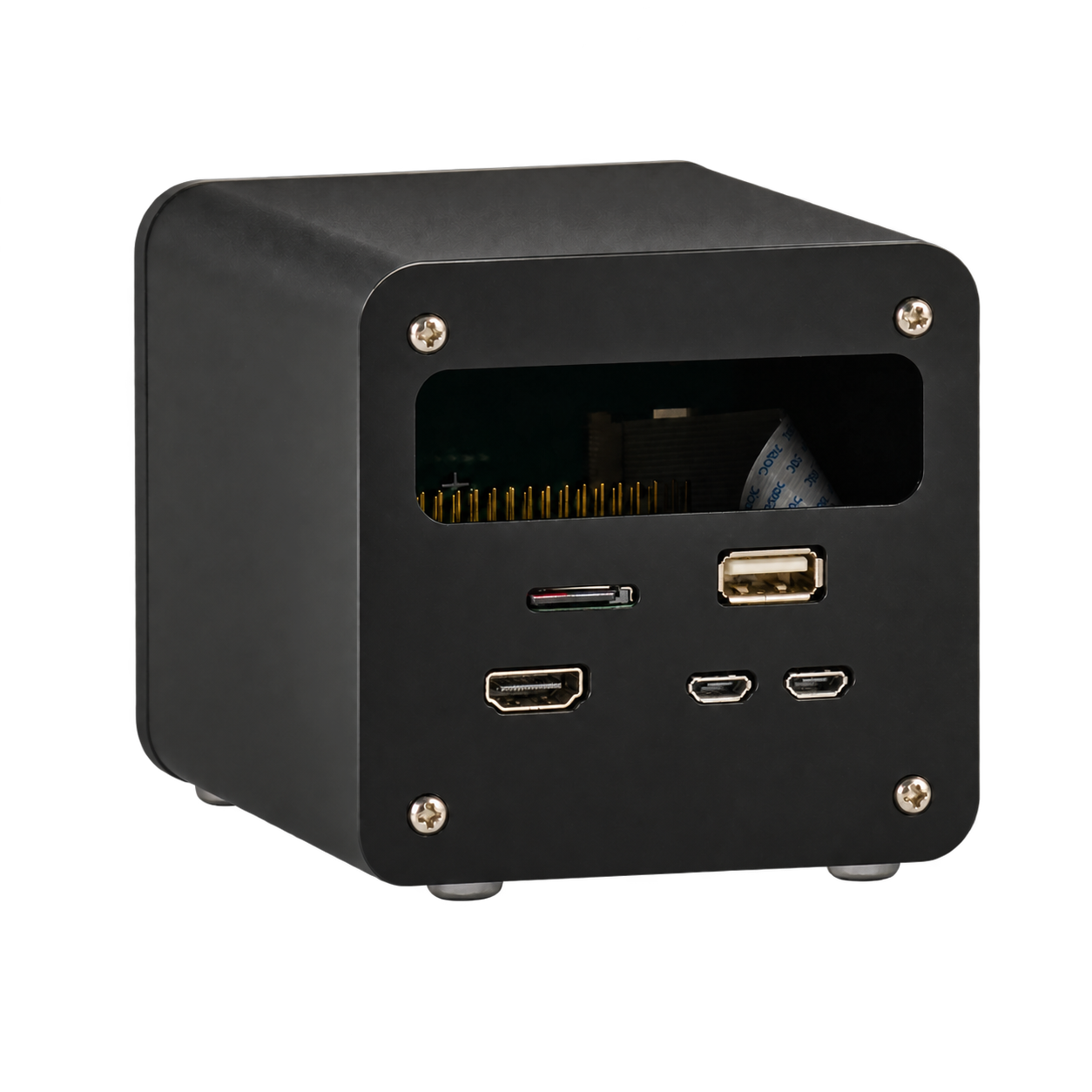
Panel composite preview.
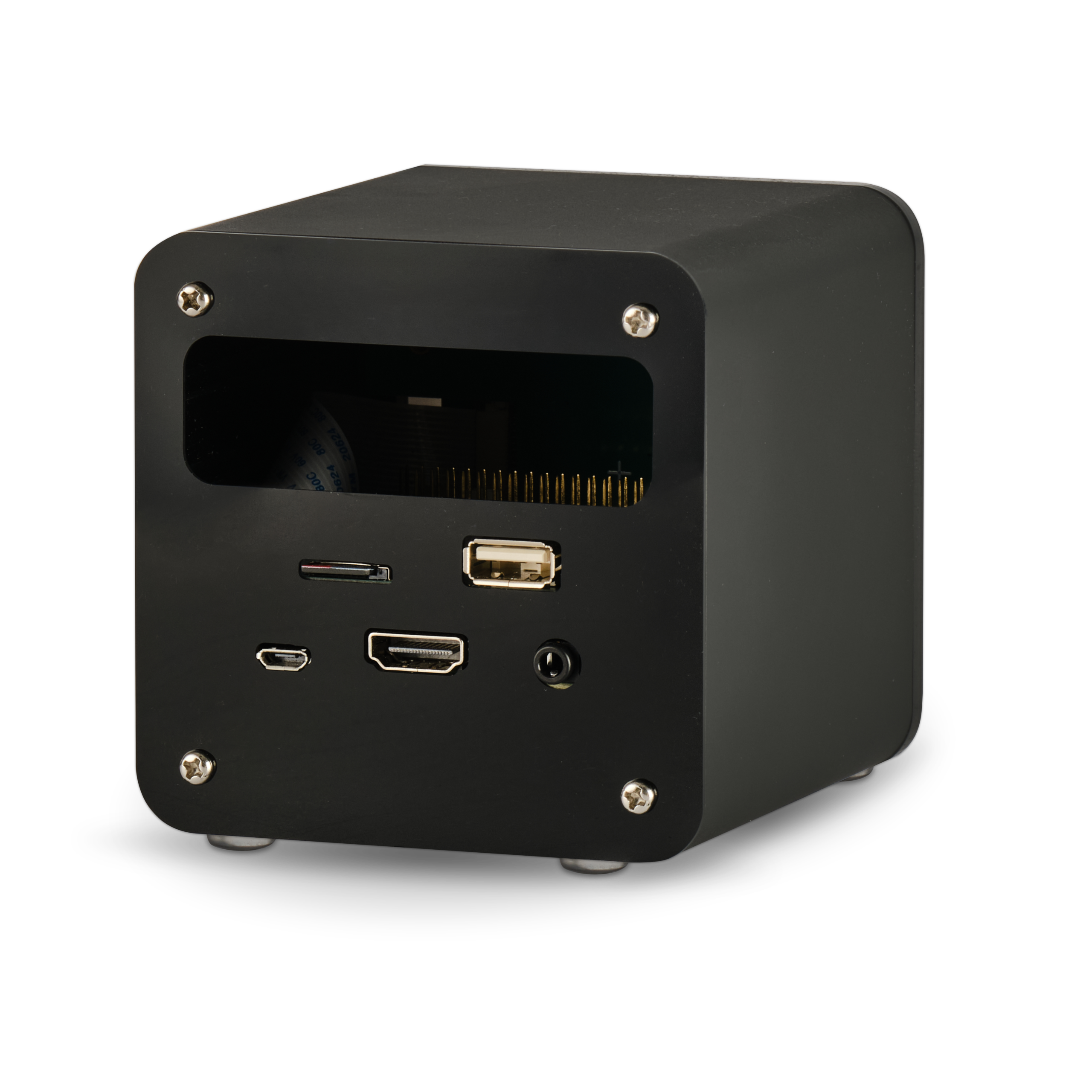
June 2026 photo shoot.
Built on community software
The display and touch implementation comes from @nerd’s rpi-waveshare28 project. The full Project Build instructions can be found on the PIXIS GitHub at PIXISREPO/PIXIS-PROJECTS.
It is a practical example of how the PIXIS approach can support a finished project: use an established software platform, bring the electronics together on a carrier board, and give the result a front panel that serves a clear purpose. The aim is to make a useful audio appliance more approachable without asking every builder to start with the mechanical and display integration from scratch.
What we have tested
On 16 September, runtime-v1.6.0 passed our reported functional checks on both portrait and landscape CB-1 / Raspberry Pi 3A+ reference units running Volumio 4.119. Those checks covered artwork, track information, a visible moving progress strip, touch volume and Play/Pause.
We also tested a clean Volumio 4.119 installation on a Raspberry Pi Zero 2 W with CB-1 and the same Waveshare display. Using Radio Paradise’s RP2 Main Mix, the portrait player passed the artwork, track-information, progress and touch-control checks. This is a useful step towards offering builders a choice of Raspberry Pi hardware upon which to build an Audio Streamer of their choice.
From working player to repeatable project
The next step is to turn those working builds into a clear, repeatable customer project. We are preparing a guide covering the hardware, installation, display orientation, everyday operation and recovery.
There is still work to finish before presenting the project as a released, ready-to-follow build. In particular, the Raspberry Pi 3A+ needs a documented preparation step for a clean Volumio image, and the complete installation and recovery route needs verification. The results above describe the configurations and functions we tested; they are not a claim that every streaming service or operating scenario has been validated.
For now, the player is an encouraging demonstration of what CB-1 can become: a compact music streamer with artwork you can see, information you can read and controls you can touch. We look forward to sharing the complete project as the remaining work is finished.